Quick Intelligence Blog

Why Downtime in December Demands More Attention

The key isn’t to eliminate risk (that’s impossible) but to reduce exposure so that if something does go wrong, the business drives faster to recovery and the impact stays contained. 

First: it begins with having real visibility into the systems and operations that matter most to your business. If you cannot answer “what happens if this workflow stops?” or “who steps in if this system fails and we’re in December?” then you don’t yet have the architecture of resilience. 

Second: response readiness matters. It means good monitoring, meaningfully defined roles and playbooks for when the unexpected happens, and ensuring your team (internal or external) is ready for those moments when they often can’t just “fix later”. 

Third: alignment of security and operations. Too often security teams focus on threat prevention as if it’s a separate stream. But in December the question is operational continuity, so the overlap between patching, access control, backup/recovery and business workflows must be tight.As December unfolds, many companies enter a phase where operations feel both familiar and fragile. Projects are closing, teams are wrapping up, and there’s an underlying expectation that we’ll finish strong before the break. That energy is useful but, it also creates a specific vulnerability: systems, workflows and people don’t always have the slack they need, so when something goes wrong the impact escalates quickly. 

Downtime at any time is bad. The difference with December is that the window for recovery, the margin for error and the cost of delays all shrink. In this environment a single technical glitch or security incident can shift from nuisance to business-threat. 

The Stakes: What the Data Reveal 

The financial exposure tied to downtime is already striking. One analysis puts the cost of unplanned downtime in small-to-medium businesses at tens of thousands of dollars per hour. For larger companies the numbers reach six-figure losses per hour. (Source: N-Able) 

In Canada the average cost of a data breach (which often causes downtime or extended recovery) has climbed to CA$6.98 million. (Source: IT-Connect) 

What this signals is clear: the cost of being unprepared is no longer theoretical.

Why December Picks Up Risk 

Several factors converge in this part of the year to raise downtime exposure: internal systems are under pressure, people’s focus is divided between finishing strong and shifting into holiday mode, response resources may be stretched and recovery demands may run into periods when key staff are unavailable. In that context what would be a manageable interruption in June becomes a serious disruption in December. 

Moreover, cyber-threats exploit these conditions. Attackers know when organisations are distracted or operating with lean support. The faster a disruption escalates, the more costly it becomes. 

What Practical Moves Make a Difference 

The key isn’t to eliminate risk (that’s impossible) but to reduce exposure so that if something does go wrong, the business drives faster to recovery and the impact stays contained. 

First: it begins with having real visibility into the systems and operations that matter most to your business. If you cannot answer “what happens if this workflow stops?” or “who steps in if this system fails and we’re in December?” then you don’t yet have the architecture of resilience. 

Second: response readiness matters. It means good monitoring, meaningfully defined roles and playbooks for when the unexpected happens, and ensuring your team (internal or external) is ready for those moments when they often can’t just “fix later”. 

Third: alignment of security and operations. Too often security teams focus on threat prevention as if it’s a separate stream. But in December the question is operational continuity, so the overlap between patching, access control, backup/recovery and business workflows must be tight.

The One Thing to Focus on Right Now 

The most valuable move you can make in December is to confirm whether you understand the state of your environment. Most downtime becomes expensive not because the issue is complicated, but because teams notice it too late. Small access gaps, stale accounts, weak endpoints and unusual behaviour appear long before anything breaks. The problem is that many companies enter December without a current picture of what those weak points are. 

Understanding your environment means getting a fresh scan of your infrastructure and identity landscape so you are working with real data instead of assumptions. It means knowing which systems are healthy, which ones are overdue for attention and where unnecessary access has accumulated. That clarity is what stops a small problem from turning into an outage during a month when people are away, timelines are tight and recovery windows are short. 

QuickIntel gives you that visibility. We run the checks that expose quiet risks, surface the signals that teams often miss and keep watch over the parts of your environment that matter most for continuity. If there is one action worth taking before the year wraps, it is to get that up-to-date view. It is the difference between a smooth December and a disruptive one. 

Why This Matters for Your Business Image and Forward Momentum 

When downtime drags into January, the goodwill you intended for new contracts or client renewals can erode. Internal teams start January reacting instead of proactive. Leadership enters the new year already frustrated rather than aligned. By treating December’s operational environment as a distinct risk window you turn a potential weakness into a point of strength. 

Start December with a clear view of your environment. Book a QuickIntel assessment and know where you stand before the rush hits. 

Topics: Backups Ransomware Phishing cyber security passwords Multifactor Authentication Compliance Privacy Breach Malware Cyber Awareness incident response

Black Friday Cybersecurity Tips for E-Commerce and Shopify Stores | Quick Intelligence

For e-commerce businesses, Black Friday and Cyber Monday can make or break the year. But while your team prepares discounts, shipping, and site performance, threat actors are preparing too. A report from Darktrace found about a 30 % increase in attempted ransomware attacks globally over the holiday period vs average months. Cybercriminals target retailers, suppliers, and DTC brands that are too focused on sales to notice vulnerabilities. 

Topics: Insider Backups Ransomware Phishing cyber security Cyber Insurance passwords Multifactor Authentication Compliance Privacy Breach Malware Digital Transformation Cyber Awareness Artificial Intelligence

Cybersecurity Without Fear: Rethinking Awareness This October

Every October, Cybersecurity Awareness Month brings the same pattern: headlines packed with scary stats, campaigns dripping with doom and overdone warnings about hackers in the shadows. The goal is noble but the tone is tired. Fear doesn’t make organizations safer. It creates noise, fatigue and mistrust. 

At QuickIntel, we believe awareness should drive action, not anxiety. This month we’re challenging the industry’s obsession with scare tactics and focusing on what helps: better culture, smarter leadership and security that supports people instead of overwhelming them. 

Why Fear Falls Flat 

It’s easy to lean on fear. Big numbers, dramatic breaches and nightmare scenarios capture attention. But when everything is presented as a crisis, employees check out. Security becomes something to dodge instead of something to embrace. 

Instead of building resilience, fear campaigns breed cynicism: “Here we go again.” That attitude is dangerous, because disengagement opens the door to real threats.  

The Real Threat: Fatigue  

Cybersecurity isn’t only technical. It’s human. And right now, employees are tired. The result? People tune out. They reuse passwords, skip updates or ignore alerts and it’s because they’re burned out. Fatigue is a security risk hiding in plain sight. 

What Employees Want  

The fix isn’t more fire drills. It’s leadership that treats people like partners and straight answers. Not empty promises of “zero risk,” but real talk about what’s protected and what isn’t. 

How Leaders Can Raise the Bar 

Here are four ways to build awareness that works:

Topics: Phishing cyber security Multifactor Authentication Compliance Cyber Awareness Artificial Intelligence

How to Achieve Comprehensive Cybersecurity

As our world becomes increasingly interconnected, the digital landscape is growing at an exponential rate. This has created a pressing need for robust cybersecurity solutions to protect our sensitive information from malicious attacks. From the protection of personal data to safeguarding critical business assets, cybersecurity stands as the barricade preserving the integrity and confidentiality of information. As threats evolve and become increasingly sophisticated, the necessity for a comprehensive defence strategy encompassing 360-degree protection and risk management emerges as paramount. In this blog, we will explore diverse cybersecurity solutions, weaving in the crucial elements of holistic protection and risk mitigation.

Topics: Insider Backups Ransomware Phishing cyber security Multifactor Authentication Compliance Breach Malware Anti-Virus Cloud Cyber Awareness incident response

4 Essential Tips for Staying Safe Online During Cyber Awareness Month

Cybersecurity Awareness Month (Cyber Month) is celebrated in Canada every October. As individuals and organizations, Cyber Month is an ideal time to consider how we can protect ourselves and our loved ones online. A great Canadian Resource for Cyber Month is the Get Cyber Safe website.

Topics: Phishing cyber security passwords Multifactor Authentication Cyber Awareness

Affordable Cybersecurity for Small Businesses: Tips and Strategies

There is a myth that says good cybersecurity is expensive. If you follow that line of reasoning, SMBs are doomed to failure. If you think the word failure seems harsh, considering that 60% of SMBs go out of business after suffering a cyber attack, it isn’t. Surely, there must be something SMBs can do to protect themselves.

Topics: Backups Phishing cyber security passwords Multifactor Authentication Malware Anti-Virus Cyber Awareness

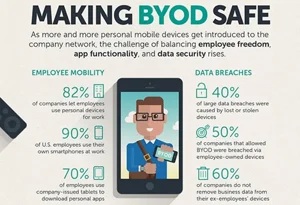
Are There Risks in Moving to a BYOD Policy?

(Image courtesy Trend Micro)

Topics: Backups cyber security Multifactor Authentication Compliance

Top 5 Things Your Law Firm can do to Improve Cybersecurity

(This is a summary of an article written for TLOMA Today: 5 Things Your Law Firm Can do Right Now to Improve Cybersecurity)

Topics: Backups Ransomware cyber security passwords Multifactor Authentication Breach Anti-Virus

Why Would a Cybercriminal Want to Hack my Small Business?

If you believe your company is too small to be targeted by cybercriminals, think again. Due to their lack of substantial cyber security budgets, small businesses are often viewed by hackers as “low hanging fruit,” or easy targets. Statistics confirm this as well.

Topics: Backups Ransomware Phishing cyber security passwords Multifactor Authentication Breach Malware

Does my Organization Need Multifactor Authentication?

(Updated from September 10, 2021)

Topics: cyber security passwords Multifactor Authentication Breach